Waste Management

From Waste
to Energy

Turning livestock waste into renewable electricity and cleaner water.

At Balao Farms, pig and poultry waste is transformed from an environmental challenge into a valuable resource. Our integrated biogas and wastewater-treatment system converts farm waste into renewable electricity and ensures cleaner water for a healthier environment.

Discover the Process

Waste Collection and
Anaerobic Digestion

Pig manure and poultry waste are collected and directed into our covered anaerobic digester lagoon. Inside the lagoon, naturally occurring microorganisms break down the organic material in an oxygen-free environment (anaerobic digestion), producing biogas, mainly methane and carbon dioxide.

The covered lagoon treats agricultural waste and produces renewable fuel.
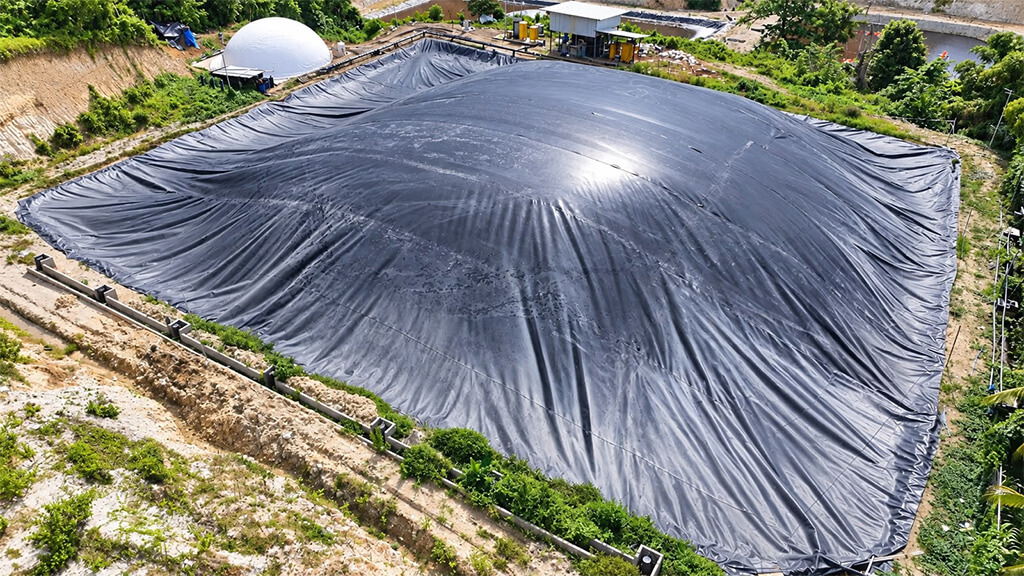
Aerial view of the covered anaerobic digester lagoon at Balao Farms
Covered Anaerobic Digester and Biogas Balloon
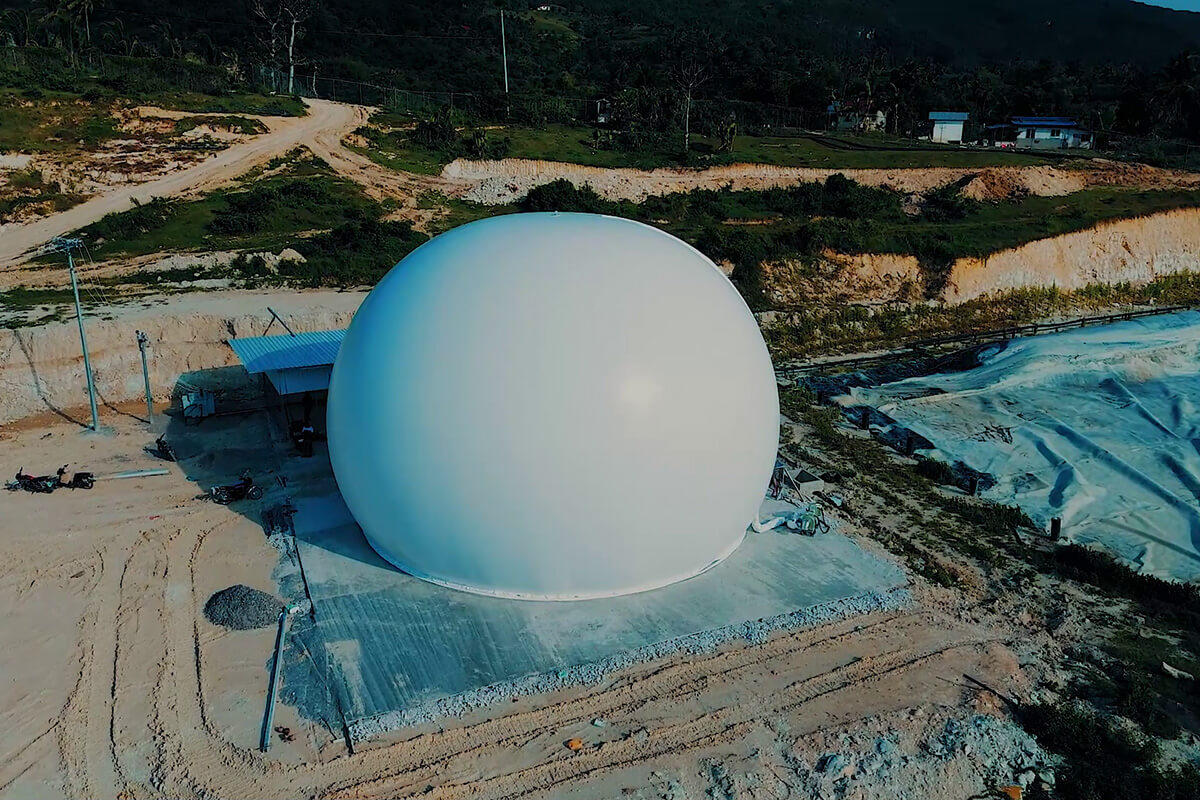
Biogas storage balloon beside the covered digester
Biogas Storage Balloon

Capturing and
Storing the Biogas

The biogas generated beneath the digester cover is collected and transferred through a gas-treatment system and stored in a large biogas balloon. The balloon balances the continuous gas production from the digester with the demand of the generators, providing a stable and reliable gas supply.

Producing
Renewable Electricity

The methane-rich biogas is used as fuel in our biogas-powered generator sets. Today, the system produces an average of:

6 MWhof renewable electricity
every day

This helps power farm operations and reduces our dependence on conventional grid electricity.

Treating the Remaining Liquid

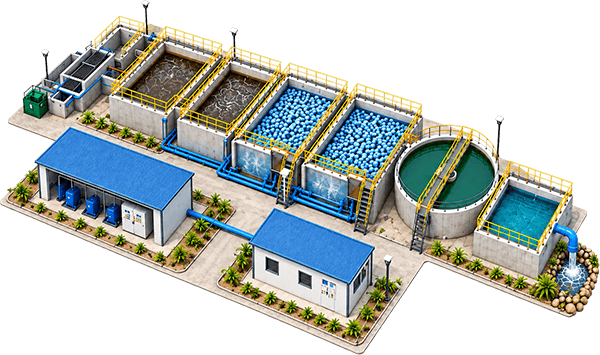
After anaerobic digestion, the remaining liquid slurry or digestate still contains organic matter and nutrients. It goes through a multi-stage biological treatment system to ensure clean and safe water before discharge.

First Biological Treatment — 200 m3 MBBR

The digester effluent first enters a 200-cubic-meter MBBR (Moving Bed Biofilm Reactor). This system uses thousands of plastic carriers where beneficial microorganisms grow as a biofilm. With continuous aeration, the carriers move freely, allowing the bacteria to break down remaining organic pollutants.

Aerial view of the farm wastewater treatment facilities
200 m2 MBBR - Wastewater Treatment Facility

The Complete Process

  1. Pig & Poultry
    Waste
  2. Anaerobic
    Digester
  3. Biogas
  4. Biogas
    Balloon
  5. Generator
  6. Renewable
    Electricity
  7. MBBR &
    Polishing Lagoons
  8. Treated Water
    to Streams